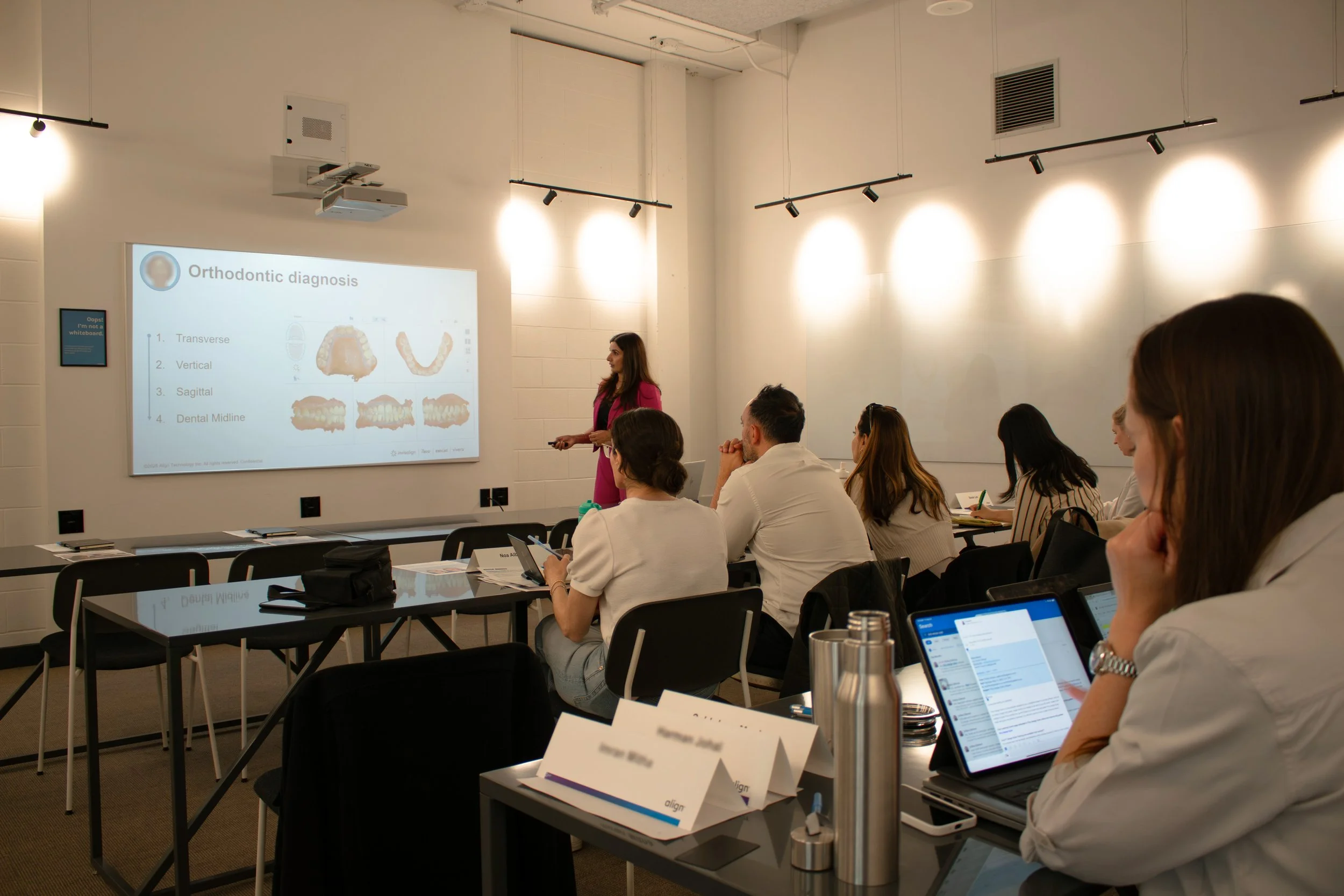
Why Are We Learning?
The dental industry is evolving, and so is the education behind it.
Clearly Aligned Mastermind
Designing Smiles with Confidence: Integrated Digital Pre-Restorative Orthodontic Planning
NEXT STOP
April 25, 2026
Calgary, Alberta
8am-5pm
Courses Previews
Here are some previews on lectures and course taught by Dr Lovedeep Randhawa around the world. Please inquire via email for private coaching and access to full lectures
-
What Patients Want vs What They Really Need - Live At GP Summit 2025
A pearl from the live Lecture of Dr Randhawa in front of hundreds of dentists at the GP Summit in Las Vegas
A pearl from the live Lecture of Dr Randhawa in front of hundreds of dentists at the GP Summit in Las Vegas
-
What Causes Whiter Teeth? - Live at GP Summit 2025
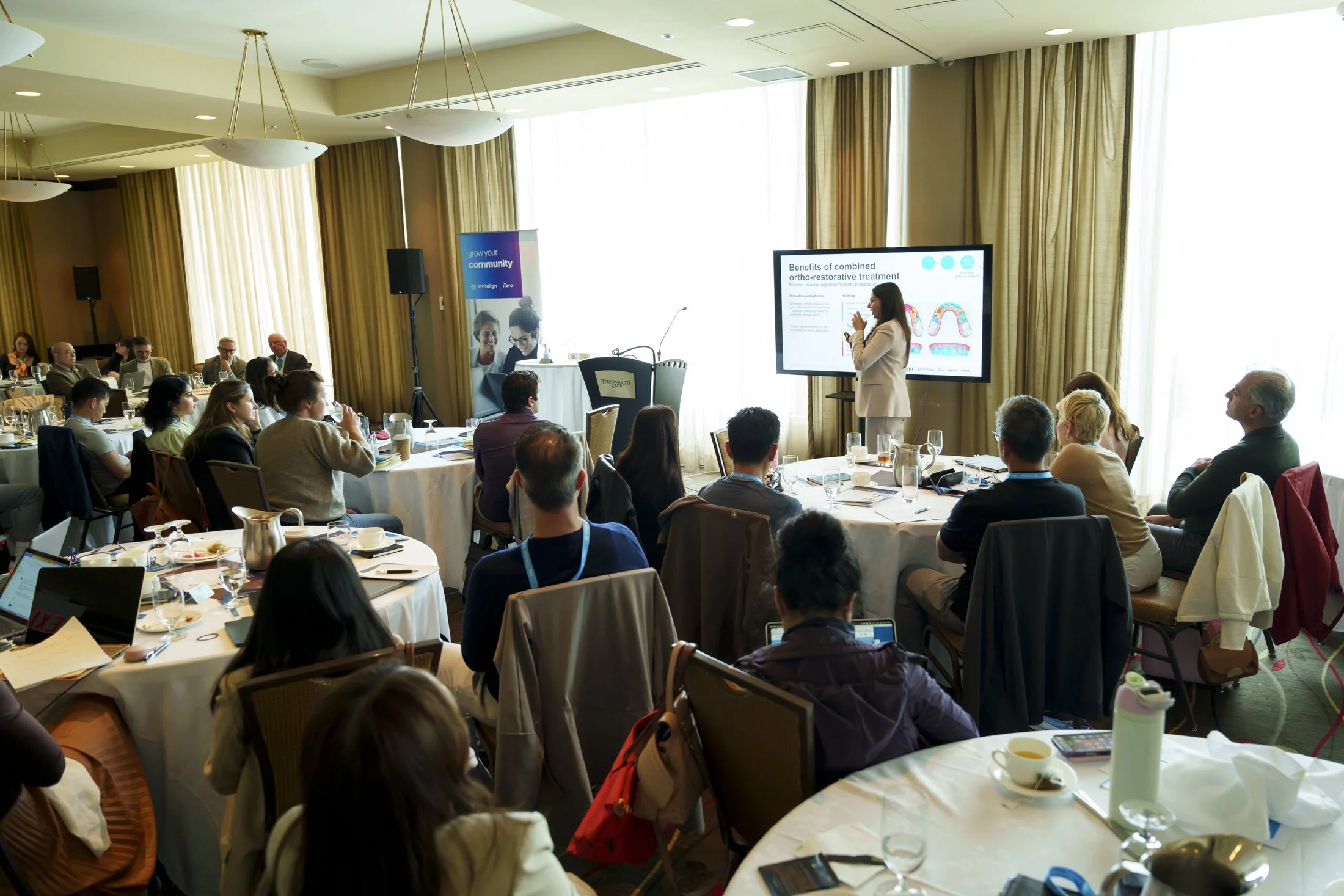
Dr Lovedeep talk about her journey in the world of Ortho Restorative at the Vancouver Pacific Dental Conference in 2025
Dr Lovedeep talk about her journey in the world of Ortho Restorative at the Vancouver Pacific Dental Conference in 2025
Philosophy on Education for General Dentists
Dr. Randhawa believes that dentistry is most effective when orthodontic and restorative planning are not treated as separate disciplines, but as integrated stages of one comprehensive process. Her philosophy emphasizes planning with the end in mind, leveraging digital tools to define functional and aesthetic goals before any clinical intervention begins. She teaches dentists to view alignment not as an elective add-on, but as a foundation for minimally invasive restorative work, improved biomechanics, and long-term stability. She advocates for treatment planning that is visual, interdisciplinary, and deliberate, and believes that when clinicians understand the full relationship between teeth, joints, muscles, and facial structure, they can design outcomes that are predictable, sustainable, and easier to communicate. Her work centers on making advanced planning principles accessible and practical for everyday GP workflows.
FAQ
-
Dr. Randhawa teaches that orthodontic alignment is not an optional aesthetic step, but a foundation for minimally invasive restorative work, functional stability, and long-term predictability. Her approach focuses on facially driven treatment planning, using clear aligners and digital workflows to establish tooth position, biomechanics, occlusal stability, and restorative space before definitive treatment. She demonstrates how these principles can be applied within general practice using simple planning systems and Invisalign Smile Architect for visualization, consent, and interdisciplinary communication.
-
Her education is specifically designed for general dentists who want to improve planning confidence without needing orthodontic specialization. She breaks down complex interdisciplinary concepts into usable frameworks that support daily decision-making, such as when to align, when to restore, and how to plan with specialists and laboratories. She focuses on making planning visual, collaborative, and financially viable using digital tools already available in most practices, including intraoral scanners, photo documentation, and ClinCheck-based workflows.
-
She believes digital tools are not just for scanning, but for thinking, planning, and communicating. Digital workflows allow dentists to define the desired functional and aesthetic outcome before any clinical intervention, bringing clarity to both patients and dental teams. She promotes planning models that are interdisciplinary, biologically respectful, and rooted in predictability. Her philosophy is to plan with the end in mind, communicate visually, restore conservatively, and help dentists make more informed, strategic treatment decisions.